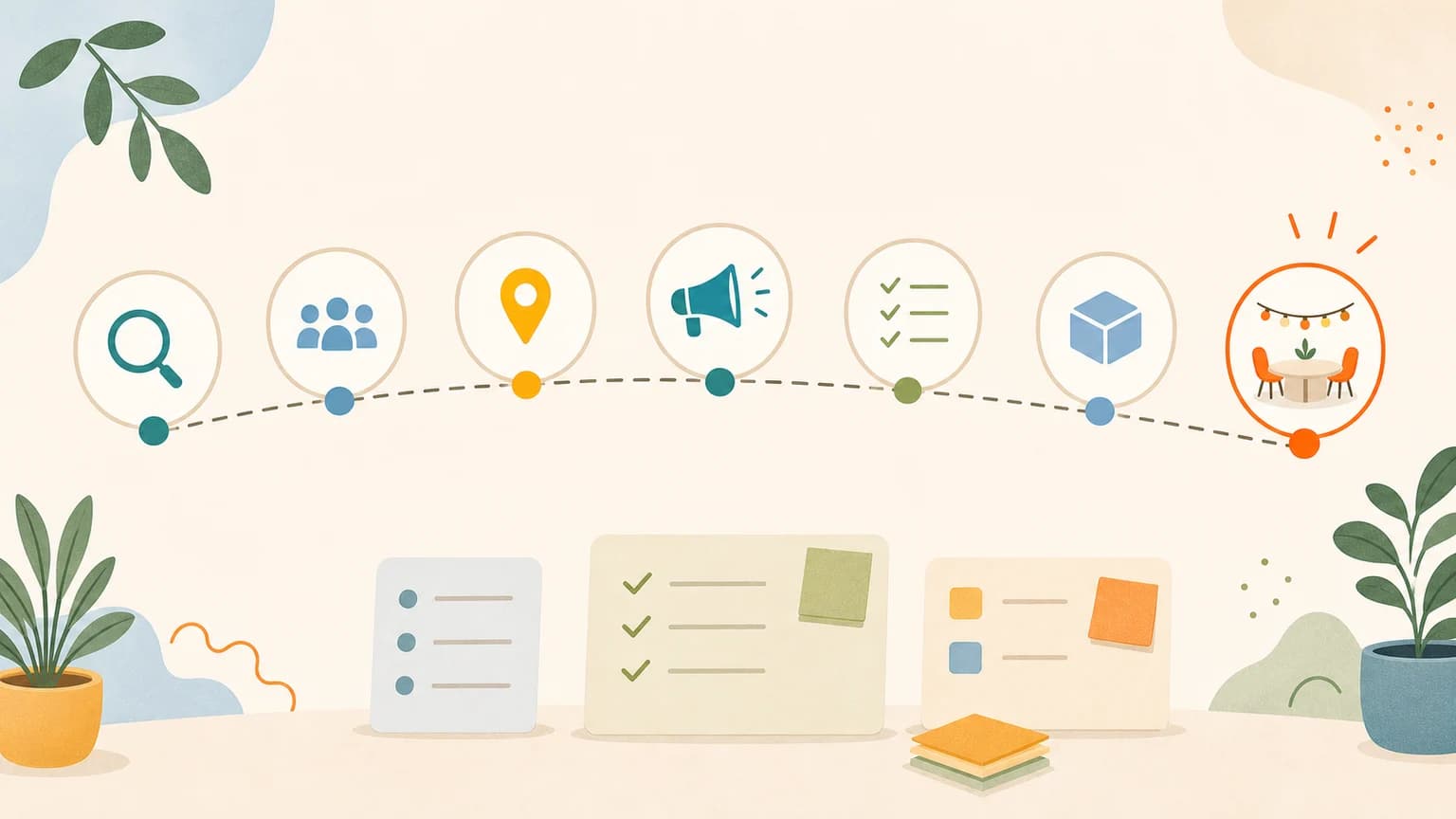
How to Host Your First Workshop
A practical first-workshop plan for choosing a narrow promise, right-sized capacity, simple public page, and registration flow you can actually run.
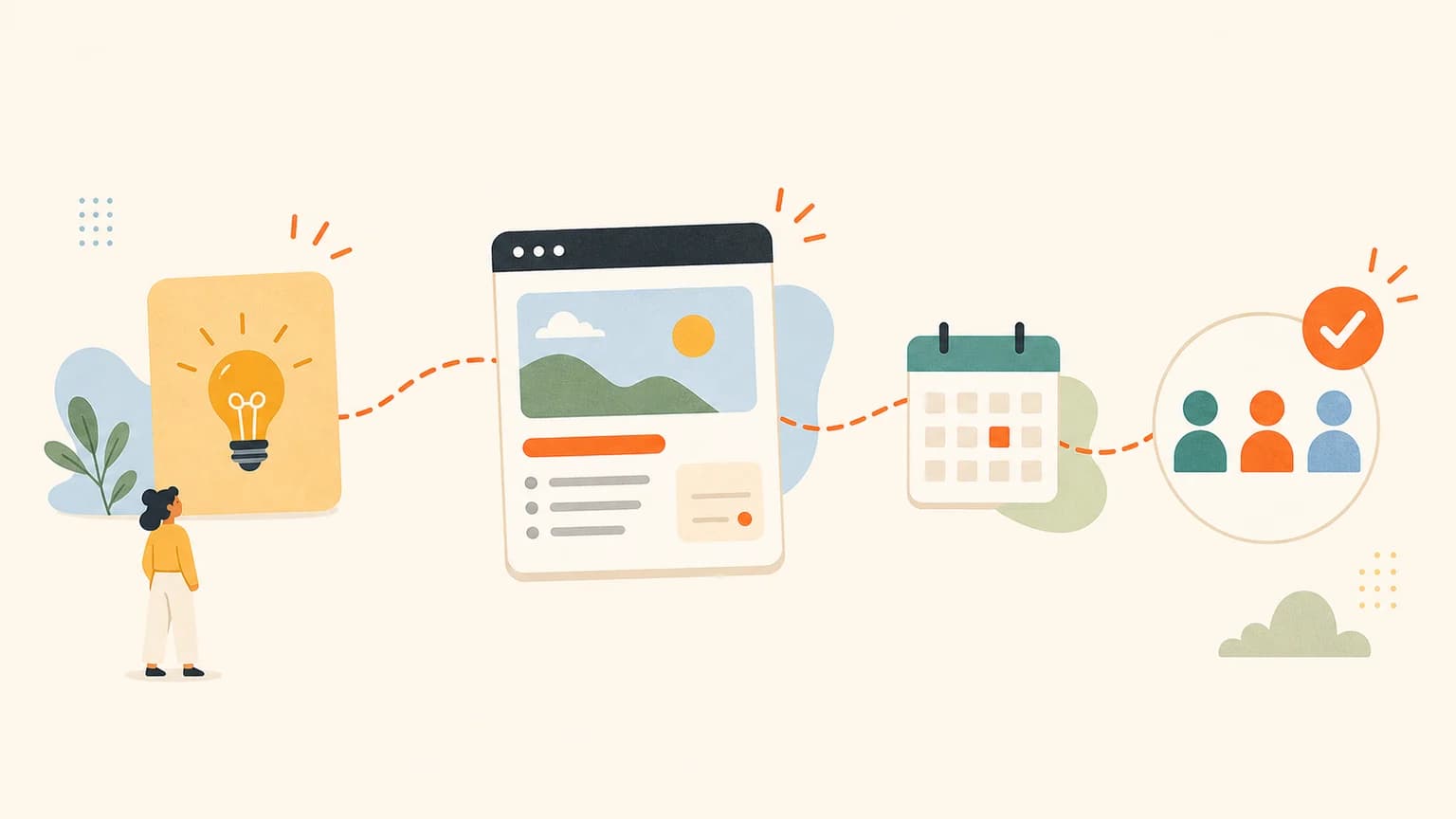
Your first workshop does not need a perfect personal brand, a large audience, or a polished course. It needs one specific promise, a room size you can serve well, a clear public page, and a registration flow that gives guests enough confidence to show up. Treat the first workshop as a real event and a live test of your repeatable format: publish the essentials, run the room calmly, and use what you learn to make the second version stronger.
Key Takeaways
- Start with one beginner-friendly outcome that can be finished in the time available.
- Choose a first capacity based on attention, materials, access, and safety, not popularity.
- Build the event page early because unclear page copy usually means the offer is still unclear.
- Ask only the registration questions you will actually use to prepare the room.
- Use a five-part workshop flow: arrival, orientation, core activity, reflection, and close.
- After the workshop, capture timing issues, repeated questions, and guest energy before planning the next one.
Make the Promise Narrow Enough to Finish
A first workshop works best when guests can understand the outcome in one sentence. The promise should name the person, the activity, the time frame, and the obstacle you will remove. A vague topic like "creative reset" asks guests to imagine too much. A clear promise like "a two-hour beginner candle making workshop where you pour one scented soy candle" gives them a mental picture before they decide.
The guest outcome comes before the topic
Most new hosts begin with the subject they love: pottery, writing, fermentation, AI tools, floral design, movement, photography, or local history. Guests begin somewhere else. They ask whether they belong in the room, what they will actually do, and whether the effort will feel worth it. Stanford Teaching Commons notes that learning activities are strongest when participants actively do something and can engage in different ways, which is a useful planning principle even outside a classroom. For a workshop host, that means the event should not only explain a topic; it should move guests through a visible activity, decision, object, draft, conversation, or practice.
The scope has to fit the room and the clock
A first-time host often tries to include every important lesson, but guests usually judge the workshop by whether the experience feels complete. Under-scope the promise until it can be delivered without rushing. Instead of "learn watercolor," choose "paint one simple landscape card." Instead of "start a business," choose "draft a one-page offer for a first paid workshop." The tighter promise also makes the public page easier to write because the title, description, agenda, and materials list all point to the same finish line. If you cannot explain what guests will leave with, the topic is not ready to publish.
Choose a Capacity You Can Actually Serve
Capacity is one of the first product decisions in a workshop. It shapes price, room layout, materials, host attention, conversation quality, accessibility, and the chance that guests feel seen. A full room is not automatically a better first event. For many hands-on or beginner-friendly workshops, 6 to 12 guests is a more useful first test than 25 people because you can notice confusion, answer questions, and keep the room moving.
Capacity is a quality decision, not a popularity score
Pick the smallest number that still makes the room feel alive. If the workshop requires individual feedback, fragile materials, sharp tools, movement, food handling, or emotional conversation, start smaller. If it is a casual book club or lecture-style salon, you may be able to host more people because the format does not require the same level of one-to-one support. The decision rule is simple: if one guest needing help would break your timing, your capacity is too high. You can always run a second session after the first one proves the format.
The safety and access checks belong in the offer
Even a small workshop needs basic risk thinking. The UK Health and Safety Executive event safety guidance frames event safety as a cycle to plan, manage, and review the event, and that mindset scales down well for independent hosts. Before publishing, check the real room: exits, movement space, tools, heat, food, allergies, seating, lighting, restrooms, and how people will arrive. The ADA National Network's guide to accessible temporary events is also a reminder that access should be designed before guests have to ask for it. If the room has stairs, scent, noise, physical movement, or limited seating, say so on the event page and provide a contact path for questions.
Build the Event Page Before You Polish the Curriculum
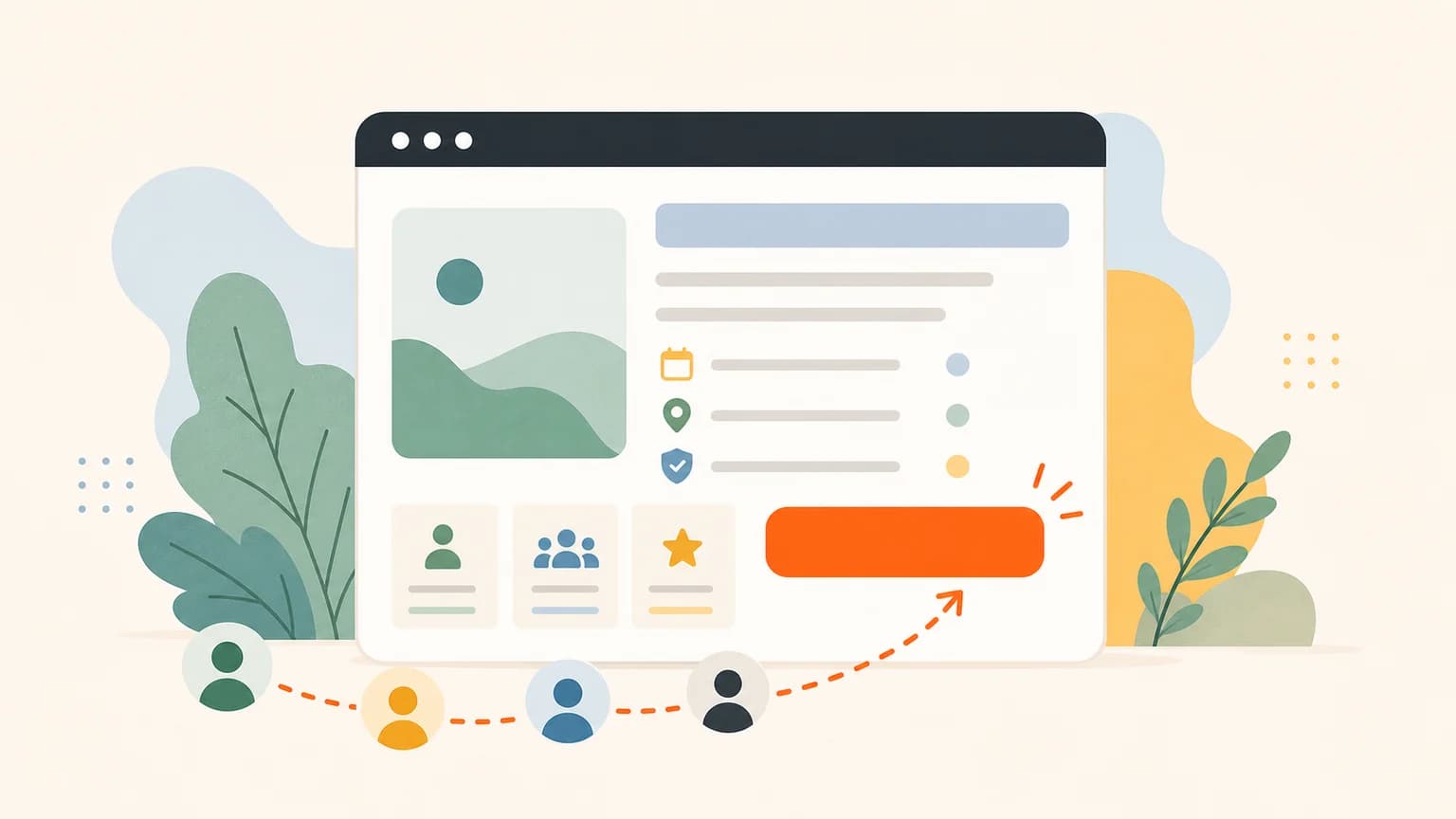
The event page is not only marketing. It is a pressure test for the workshop. If the page is hard to write, the offer is probably still too broad, the audience is unclear, or the agenda has not become real enough. A useful first page answers six questions quickly: who it is for, what guests will do, when it happens, where it happens, what is included, and how to reserve a spot.
Use scannable copy because guests scan under uncertainty
People do not read an unfamiliar event page like a novel. Nielsen Norman Group's research on how people read on the web shows why headings, concrete phrases, short paragraphs, and visible details matter. A guest who is only half-sure will scan for the exact sentence that lowers risk: beginner-friendly, supplies included, small group, two hours, no prior experience, wheelchair-accessible entrance, or clear refund expectations. Write the page so those answers are easy to find. Personality is welcome, but it should never hide the format, because the format is what lets people decide.
Put structured details where guests and search engines can read them
A public event page should carry the real event details in visible copy: date, time, location, description, image, organizer, price or free RSVP, and availability. Google's Event structured data documentation is written for site owners, but it reinforces a practical lesson for hosts: event information works best when it is explicit, consistent, and easy for systems to understand. HereNow public event pages can include metadata and structured event details, but the host still needs to verify the logistics before publishing. Search engines can decide whether and when to index a page; clear event details simply make the page more trustworthy and machine-readable.
Collect Registrations That Help You Host
Registration should reduce uncertainty for both sides. Guests need a short path from interest to commitment. Hosts need enough information to prepare materials, seating, access, reminders, and follow-up. The mistake is treating registration as a survey. If a question will not change what you prepare or how you host, leave it out of the first version.
Ask only for information you will use
The W3C Web Accessibility Initiative's forms tutorial recommends asking only for information required to complete the transaction or process because excessive forms create abandonment risk and accessibility friction. For a first workshop, start with name and email, then add practical questions only when needed: experience level, material choice, dietary needs, accessibility needs, or what made the person interested. Each field should have a clear label and a clear reason. If you cannot explain why the host needs the answer, the guest should not have to provide it. That discipline keeps the registration form useful instead of turning it into a barrier.
Keep accessibility and prep questions practical
Accessibility questions should be broad enough to invite useful information without putting the burden on guests to solve your event design. A simple line such as "Anything we should know to make the session comfortable for you?" is often better than a long medical or personal questionnaire. Harvard's guidance on planning accessible meetings and events recommends planning accessibility on the front end and including expected accommodation costs in the event plan. For a small host, that translates into practical page details: entrance, seating, restroom access, sensory conditions, materials, food, and who guests can contact with questions.
Design the Session Around a Simple Five-Part Flow
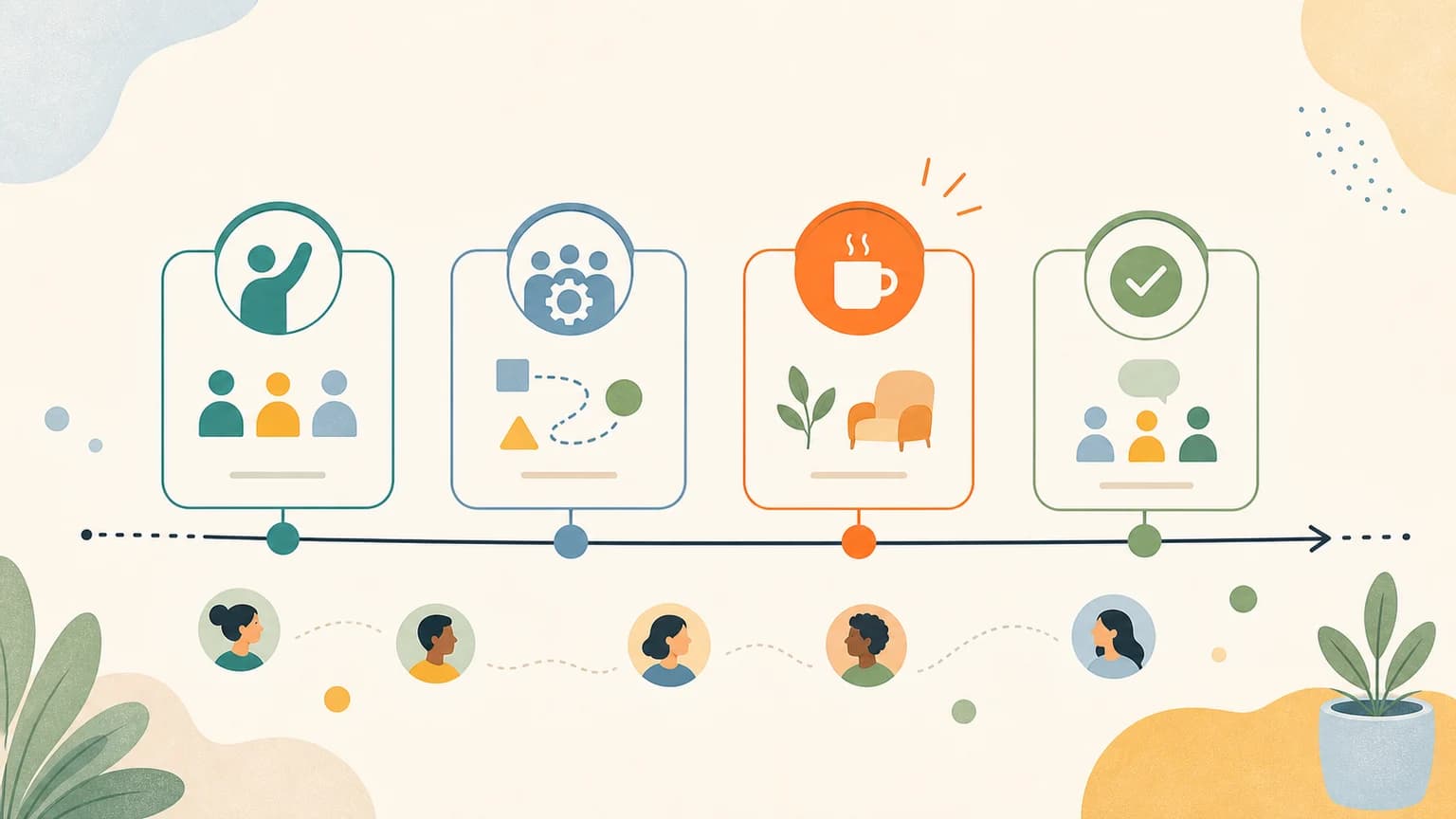
A workshop agenda is the bridge between the promise and the room. It should protect the guest experience, not impress people with complexity. Most first workshops can use five blocks: arrival, orientation, core activity, reflection, and close. You can rename the blocks to match your style, but each one has a job.
Use activity blocks instead of a lecture stack
Arrival gives guests a soft landing. Orientation explains what will happen and how to participate. The core activity delivers the promise: making, practicing, writing, discussing, tasting, or building. Reflection helps guests name what they learned or made. The close tells them what happens next. This structure matters because guests remember transitions as much as content. If your first workshop is two hours, do not spend 45 minutes introducing ideas before people touch the materials or start the conversation. The sooner guests do the thing they came for, the more real the workshop feels.
Save private tasks for the host run sheet
The public agenda and the private run sheet should not be identical. The public agenda reassures guests: welcome, demo, hands-on making, questions, close. The private run sheet includes setup time, supply checks, backup materials, payment or RSVP list, room reset, cleanup, and timing notes. This separation keeps the event page clean while still giving you an operating plan. A private run sheet can be messy and practical; the public page should stay calm. If you want a deeper agenda framework before writing the page, read the related HereNow guide on how to create an event agenda.
Publish, Invite, and Learn From the First Room
Once the offer, capacity, page, registration questions, and agenda are clear, publish the page before you keep polishing private notes. Digital.gov's plain language guide frames clear public communication around helping a specific audience understand what they need to know. That is also the right standard for a workshop page. If a guest can understand the promise, logistics, expectations, and signup path, the page is ready enough to share.
Start with personal invitations, not a broadcast blast. Send the page to people who can recognize the event quickly: friends of friends, past clients, students, community members, neighbors, or peers. The message should be short and specific. Let the event page carry the details. After the workshop, write down what happened before memory softens it: where timing slipped, what guests asked, which moment created energy, which materials ran short, and what you would change before hosting again.
Start Your First Workshop Page in HereNow
HereNow is built for the blank-page moment: a rough idea becomes an editable event page with title, description, agenda, RSVP settings, visual direction, and a shareable link. You can create your event page from one sentence, then refine the promise, capacity, registration questions, and agenda before publishing. If you want a familiar starting point, browse event templates. When the page is ready, the Help Center guide to preview and publish your event page can help you check the final details.
FAQ
How long should a first workshop be?
Many first workshops work well at 90 minutes to two hours because that gives enough time for arrival, orientation, one main activity, questions, and a clear close. If the activity requires setup, drying time, food, movement, or deep discussion, add time only when the extra minutes improve the experience. A longer workshop is not automatically more valuable if guests spend the added time waiting or listening to setup.
How many people should I invite to my first workshop?
Invite more people than your target capacity, but set the actual capacity at the number you can serve calmly. For many beginner, hands-on, or paid workshops, 6 to 12 confirmed guests is a strong first test. If the format is discussion-based, choose the number that still gives everyone a chance to participate. If the event depends on individual feedback or materials, start smaller and repeat the session later.
Should my first workshop be free or paid?
Either can work, but the choice should match the promise and risk. A free RSVP lowers friction when you are testing a new format or building trust. A paid ticket can help cover materials and create stronger commitment, but it also raises the need for clearer inclusions, timing, policies, and host credibility. Do not price the event by guessing what others charge; price it around cost, value, capacity, and trust.
Do I need a perfect brand before hosting?
No. You need a clear promise, a reliable page, and a room you can host well. A lightweight host brand can grow from repeated events: photos you actually own, guest feedback, a consistent tone, a stronger bio, and a clearer audience. For a first workshop, trust comes more from specificity than polish. Guests want to know what will happen, why you can guide it, and how to register without friction.
What should I do after the workshop ends?
Capture the lesson while the room is still fresh. Note timing problems, repeated questions, material issues, high-energy moments, and the guest type the workshop served best. Then send a short follow-up with thanks, any promised resources, and the next step if one exists. The first workshop becomes more valuable when it improves the second page, the next agenda, and the next invitation.